When to Search for Garage Door Repair Near Me: A Homeowner's Guide
Your garage door is one of the hardest-working parts of your home. It opens and closes thousands of times a year, bears the weight of an overhead door, and endures Minnesota's freeze-thaw cycles, summer humidity, and winter ice. When something goes wrong - a sudden refusal to open, a grinding noise, or a door that slams shut - the natural instinct is to search for "garage door repair near me" and hope for a quick fix. Knowing what to expect from that search, and what to look for when a technician arrives, can save you time, money, and frustration.
How Garage Doors Work: The Basics
A residential garage door is a system of moving parts that must work together precisely. The door itself is usually a sectional overhead door made of steel panels that ride on rollers along vertical tracks on each side. A torsion spring mounted on a shaft above the door opening counterbalances the door's weight. When you press the button on a keypad entry or a wall-mounted opener, the garage door opener - often a LiftMaster, Chamberlain, or Genie unit - turns a shaft that winds a cable, pulling the door upward along the track. Safety sensors near the floor detect obstructions and reverse the door if something is in the way. A manual release handle allows you to disconnect the opener and operate the door by hand during a power outage.
Each component has a typical lifespan. Springs eventually lose tension. Rollers wear down and cause the door to wobble. Cables can fray. Sensors get knocked out of alignment. The opener motor can fail after years of service. Recognizing which part is failing helps you describe the problem accurately when you call for "garage door repair near me."
Common Garage Door Problems and What They Mean
Not every issue requires a service call. Some can be solved with basic troubleshooting. But others demand professional attention. Here are the most frequent problems homeowners face in the Twin Cities area and what they indicate.
Door Won't Open or Close
If the door does not respond to the opener or the wall switch, start by checking the power source. The opener should be plugged in and the circuit breaker should not be tripped. If the opener hums but the door does not move, the problem is often a broken spring or a snapped cable. A torsion spring that has broken will leave the door extremely heavy and dangerous to lift manually. Attempting to force it open can cause injury or damage the door panels. This is a job for a trained technician who can safely replace torsion springs and re-tension them.

If the opener runs but the door only moves a few inches and stops, the safety sensors may be misaligned or blocked. Sensors are mounted on each side of the door opening, about six inches above the floor. They send an invisible beam across the opening. If the beam is interrupted by debris, a spider web, or a shifted bracket, the opener will refuse to close the door. Cleaning the sensor lenses and adjusting their alignment usually fixes this. If the sensor itself is damaged, a replacement is needed.
Noisy Operation
All garage doors make some sound, but excessive noise usually means something is worn out. Grinding or squeaking often points to rollers that have dried out or developed flat spots. Roller repair involves replacing the small wheels that ride in the track. If the noise is a loud bang when the door reaches the bottom, the spring tension may be off or the track alignment could be out of square. A technician can check the track with a level and adjust the brackets to ensure the door travels evenly.
Another common source of noise is the opener itself. Older chain-drive openers can rattle, while belt-drive units like many LiftMaster and Chamberlain models can develop slack. Genie openers sometimes make a clicking sound when the limit switches need adjustment. A professional can diagnose the source and perform the right repair rather than replacing parts unnecessarily.
Door Moves Unevenly or Gets Stuck
When one side of the door moves faster than the other, or the door binds halfway up, the track alignment is the likely culprit. Over time, settling of the garage foundation or impact from a vehicle can push a track bracket out of position. The tracks must be parallel and the door must travel in a straight line. A technician can loosen the track brackets, realign the sections, and retighten everything. This is a precise job because even a quarter-inch misalignment can cause the door to jam.
Cable repair is another possibility. The lift cables run from the bottom bracket on each side of the door up to the spring system. If a cable is frayed or has slipped off its drum, the door will hang unevenly. A cable that snaps under tension can whip violently, so this repair should always be left to a professional.
When to Call a Professional
Some repairs are straightforward enough for a handy homeowner: lubricating hinges, tightening loose hardware, or replacing a weather seal that has cracked from exposure to Minnesota sun and cold. But many tasks require specialized tools, experience, and an understanding of spring tension. Attempting a spring replacement without the right equipment can result in serious injury. The same goes for working on the opener's internal wiring or adjusting the force settings.
If your garage door is under warranty, check the terms before you do anything. Many warranties on openers and door components require that repairs be performed by a licensed technician to keep the warranty valid. LiftMaster, Chamberlain, and Genie all have service requirements that can void coverage if work is done by an unqualified person.
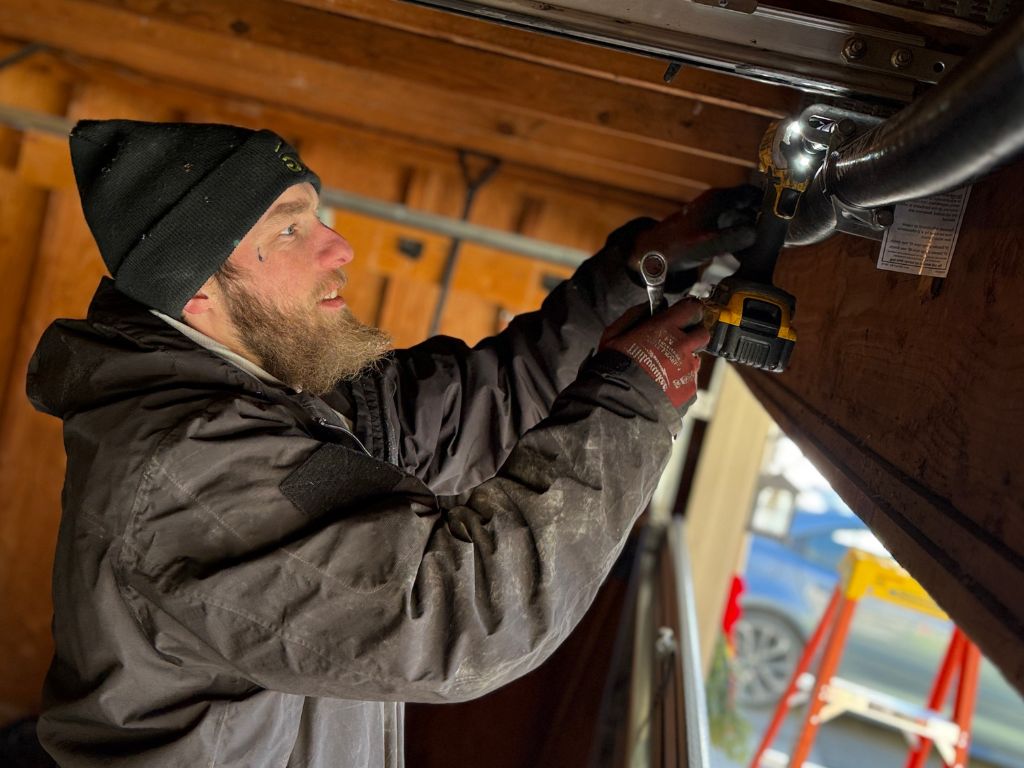
When you do search for "garage door repair near me," look for a company that has been in business for several years, carries insurance, and offers a warranty on their work. A reputable service will send a technician who arrives in a marked vehicle, can diagnose the issue quickly, and explains what needs to be done before starting the repair. They should be able to give you a clear estimate of the cost and the time involved.
Preventive Maintenance: What You Can Do
The best way to avoid emergency repairs is to perform simple maintenance every few months. Start by inspecting the door's hardware. Tighten any loose bolts on the hinges, brackets, and track supports. Lubricate the rollers, hinges, and spring with a silicone-based spray. Do not use grease or oil-based lubricants because they attract dust and can gum up over time.
Test the safety sensors once a month by placing an object like a cardboard box in the door's path and pressing the close button. The door should reverse immediately. If it does not, check the sensor alignment and clean the lenses. This is a critical safety check, especially in homes with children or pets.
Check the weather seal along the bottom of the door. A worn seal lets in drafts, moisture, and pests. Replacing it is a straightforward job: remove the old seal, clean the bottom panel, and slide on a new seal of the same width. This helps keep your garage warmer in winter and reduces energy loss.
Listen for changes in how the door sounds. A new squeak or a thump that was not there before is worth investigating. Catching a problem early often means a simpler and cheaper repair. If you notice the door hesitating or moving slower than usual, it could be a sign that the opener's motor is struggling or that the spring tension has changed.
What to Expect from a Service Call
A typical service call for a garage door repair starts with the technician asking about the symptoms. They will operate the door themselves to observe the issue. Then they check the spring tension, the track alignment, the condition of the cables and rollers, and the opener's operation. If the problem is minor - a sensor adjustment or a loose bolt - they may fix it on the spot without needing parts. For bigger jobs like spring replacement or opener replacement, they will provide an estimate and explain the options.

Most repairs can be completed in a single visit if the necessary parts are in stock. Common replacements like rollers, cables, sensors, and weather seals are usually carried on the truck. Less common parts like a specific opener circuit board or a non-standard size spring may need to be ordered, which could mean a second visit.
After the repair, a good technician will test the door several times to make sure everything works smoothly. They will also check the balance of the door by disconnecting the opener and lifting it manually. A properly balanced door should stay in place when raised halfway. If it falls or rises on its own, the spring tension needs adjustment.
Final Thoughts
Your garage door is a mechanical system that will eventually need attention. Knowing the common failure points and understanding what kind of repair each symptom points to can help you make better decisions when something goes wrong. When you do need help, searching for "garage door repair near me" and choosing a qualified professional in the Minneapolis and St. Paul area will get your door back in working order quickly. With regular care and prompt repairs, a quality overhead door and opener can give you reliable service for many years.